I recently had an op-ed of mine featured in the Observer about the exploding SMS-based assistant category.
Check out the full post here: https://observer.com/2026/10/meta-openai-ai-assistant-superapp/
An opening snippet below…..
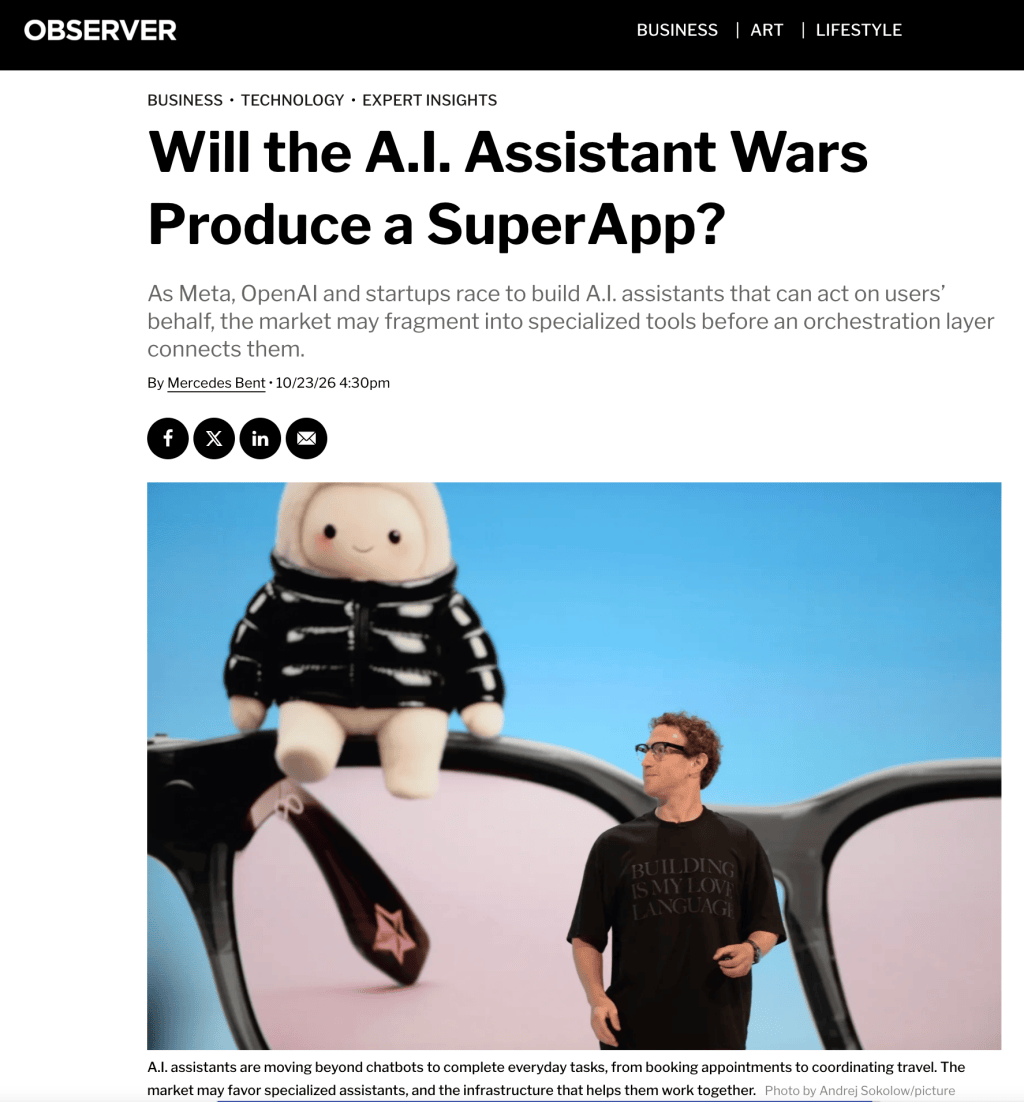
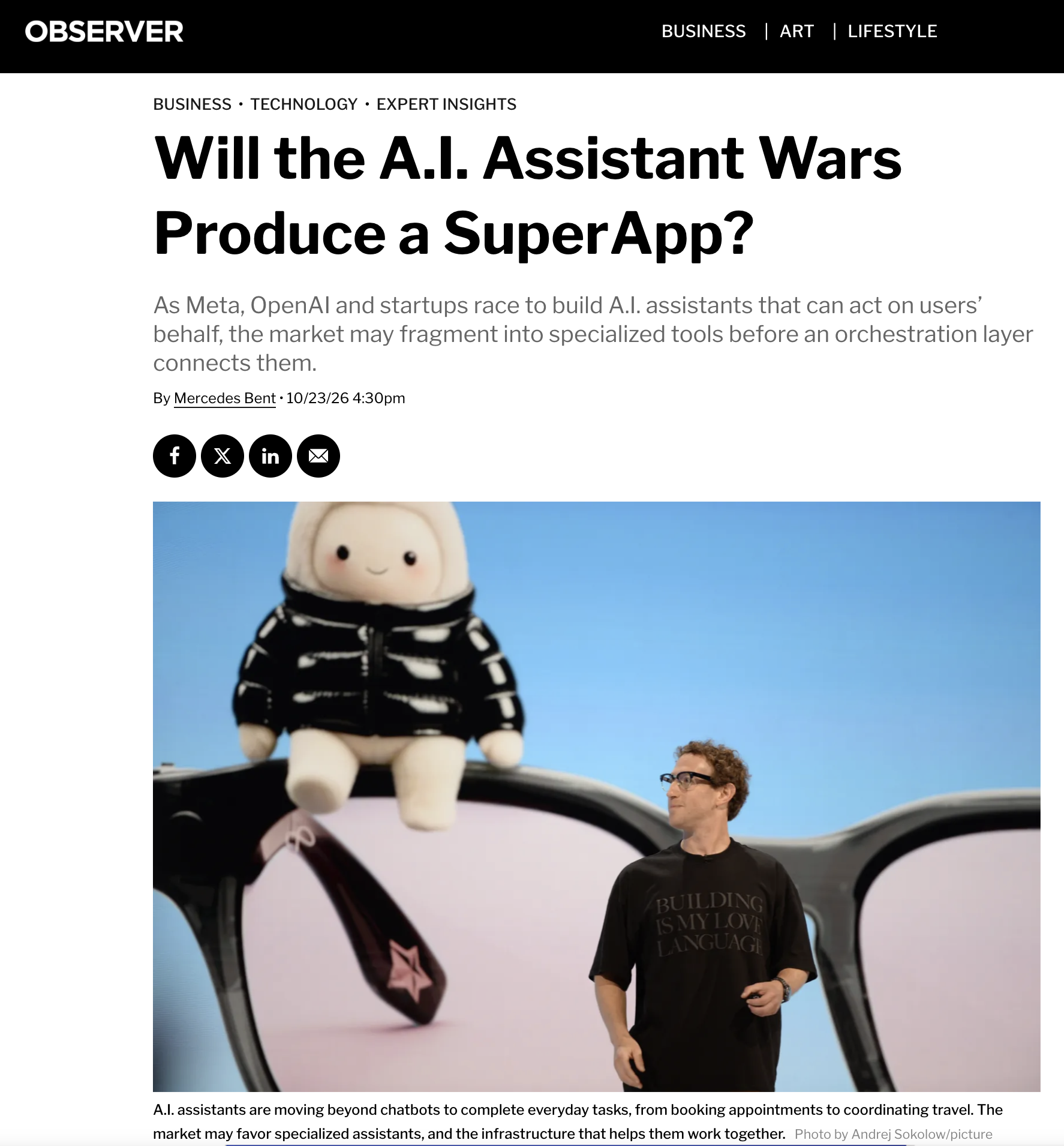
A.I. assistants are moving beyond chatbots to complete everyday tasks, from booking appointments to coordinating travel. The market may favor specialized assistants, and the infrastructure that helps them work together. Photo by Andrej Sokolow/picture alliance via Getty Images
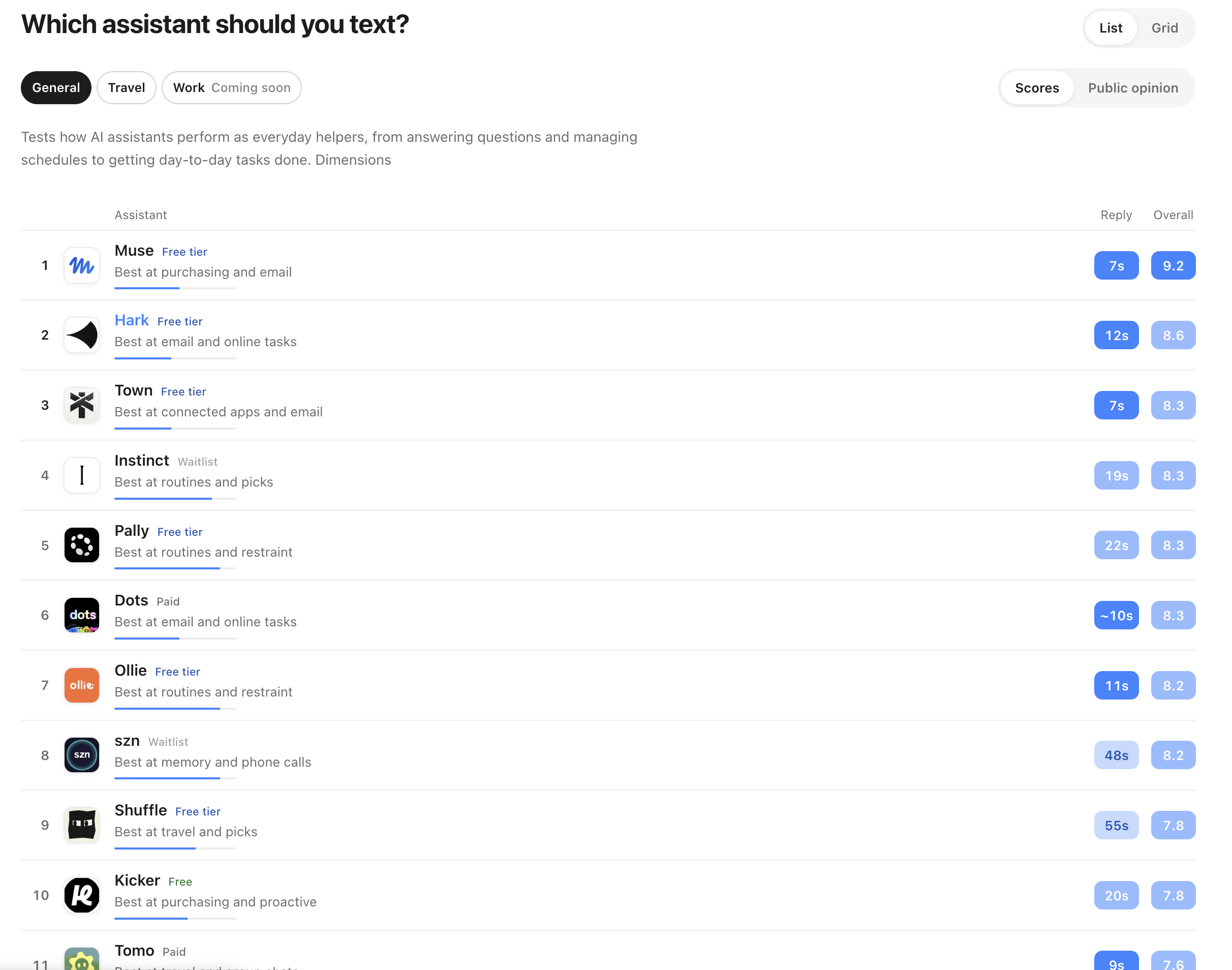
Meta, OpenAI and a growing field of startups are racing to move A.I. beyond chatbots and into everyday life—on our phones, in our text messages. Products such as Meta’s Muse, OpenAI’s Dots, Wajo’s Fo, Town, Hark and Instinct are designed to help users manage email, make purchases, plan travel and complete tasks through familiar messaging interfaces. Their ambition is to become the layer that people rely on to complete nearly everything on their to-do lists, creating a new category called “SMS-based A.I. assistants.”
The market is already attracting significant attention, growing from non-existent to millions of users in a matter of weeks. Meta’s Muse, which launched in September, reached 10.9 million downloads in its first 40 days, reaching approximately 2.5 million daily active users. Those early numbers suggest that customers are willing to try A.I. tools that promise to act on their behalf, not just generate answers.
But I don’t think this is the moment when one A.I. SuperApp takes over everything. More likely, the market will fragment into specialized categories, consolidate around a few leaders in each and eventually develop an orchestration layer that coordinates different agents. Here’s why.
Americans don’t need one app for everything
No one actually wants a super app, at least in the U.S. American consumers have spent decades building digital lives around specialized products. We use separate apps for messaging, managing money, booking travel and doing our jobs. Even when one platform can handle multiple tasks, we often prefer the tool that does a particular job best.
Specialization is as core to the American psyche as our Protestant roots and the Industrial Revolution. The logic is familiar from economics. In The Wealth of Nations, Adam Smith, credited with founding modern economics, argued that the division of labor could dramatically increase productivity by breaking work into specialized tasks. Software has largely followed the same pattern wherein products win by solving particular problems well, then build durable customer relationships around those use cases.
A.I. is already showing similar signs of specialization. People use Claude for coding, ChatGPT for general questions and other tools for domain-specific research or workflow automation. Power users are willing to pay for multiple subscriptions when each product offers something the others don’t. A.I. won’t necessarily erase this preference. As underlying models become more interchangeable, the advantage of an application increasingly comes from specialized workflows, integrations, user experience and proprietary data. The model matters, but so does how effectively a product applies it to a particular task.
To continue….read the rest here https://observer.com/2026/10/meta-openai-ai-assistant-superapp/


Leave a Reply